GEOTECHNICAL ENGINEERING1
GLOUCESTER
HomeLaboratoryTriaxial test

Triaxial Testing for Site Investigation in Gloucester

Practical geotechnics, field-tested.

LEARN MORE

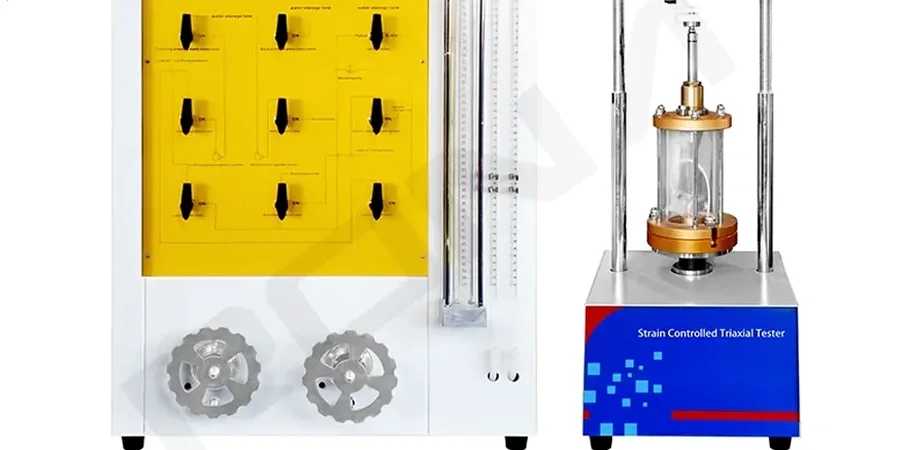
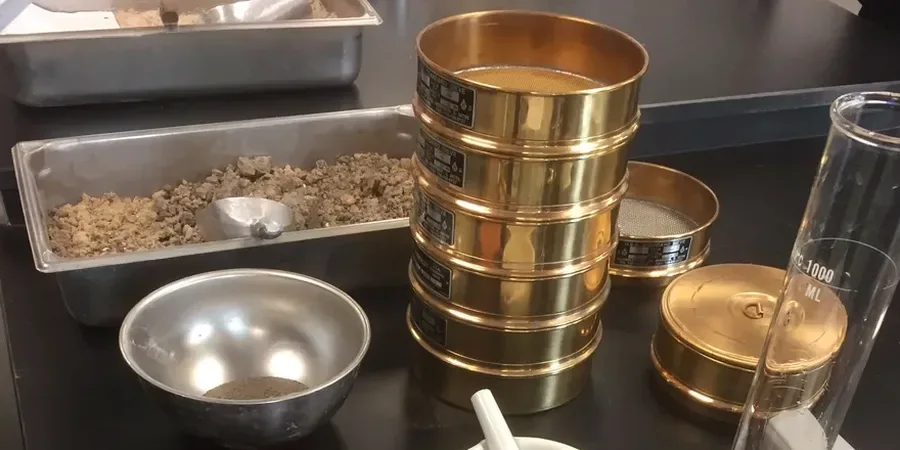
The triaxial cell sits in our loading frame, a transparent cylinder enclosing a soil specimen trimmed to precise dimensions. Gloucester clay samples arrive in sealed tubes, and the first thing we check is saturation. A back-pressure system forces water into the sample pores while cell pressure increases in step, and we monitor the Skempton B-value until it hits 0.95 or better. Only then does the shear stage begin. The load ram descends at a rate calculated from consolidation data, and the internal load cell records deviator stress while pore pressure transducers track excess pressure that a drained test would dissipate. For a city built on Lias Clay and alluvial gravels of the Severn Vale, these numbers define foundation design. A grain size analysis on the same borehole sample gives us the silt fraction, and knowing that helps interpret triaxial results when drainage paths are short.

An effective stress analysis without triaxial data is just guesswork dressed up as calculation.
Our service areas

How we work

Gloucester's riverside developments near the Docks sit on soft alluvium with organic lenses barely 3 metres thick, while the higher ground toward Robinswood Hill rests on stiffer Lower Lias Clay. That contrast translates directly into triaxial parameters. A consolidated-undrained test with pore pressure measurement on Docks silts might show an effective friction angle of 26 degrees and cohesion intercept near zero, whereas a Robinswood sample tested identically returns phi' of 22 degrees but a cohesion intercept of 8 kPa due to overconsolidation. The difference dictates whether a shallow footing works or a piled solution becomes necessary. We run multi-stage tests on single specimens when sample recovery is poor, a common problem in the gravelly transition zones between the Cheltenham Sand and underlying clay. Combining triaxial data with SPT drilling logs from the same site lets us correlate N-values with stiffness parameters across the entire borehole depth.
Triaxial Testing for Site Investigation in Gloucester
Technical reference — Gloucester

Local geotechnical context

Gloucester's post-war expansion pushed housing onto the Lias Clay slopes east of the city centre, and some of those 1950s estates now show cracking patterns that trace back to inadequate site investigation. Lias Clay weathers to a desiccated crust in summer, and its undrained shear strength measured in a quick UU triaxial test can look deceptively high at 120 kPa. But if a developer assumes that strength at depth and skips a consolidated-undrained test, they miss the drop to 45 kPa once the clay re-saturates under foundation load. The Cathedral itself stands on gravels that have performed well for centuries, but modern extensions nearby encounter the same variable ground that makes Gloucester's floodplain a geotechnical puzzle. A CPT test provides continuous profiling through those gravel lenses, and the triaxial data on clay samples between gravel bands completes the picture for effective stress stability analysis.

Need a geotechnical assessment?

Reply within 24h.

Email: contact@geotechnical-engineering1.com

Applicable standards

BS 5930:2015 + A1:2020 – Code of practice for ground investigations, BS EN 1997-2:2007 – Eurocode 7: Geotechnical design – Ground investigation and testing, BS 1377-7:1990 – Methods of test for soils for civil engineering purposes – Shear strength tests (total stress), BS 1377-8:1990 – Shear strength tests (effective stress)

Typical values

ParameterTypical value
Test types offeredUU, CIU, CID, multi-stage CU
Specimen diameter38 mm, 50 mm, 70 mm, 100 mm
Maximum cell pressure1,700 kPa (standard), 3,500 kPa (HP)
Pore pressure measurementMid-plane electronic transducer
Saturation methodBack-pressure with B-check validation
Reporting standardBS 5930:2015 + A1:2020, BS EN 1997-2
Typical shear rate range0.001 to 1.0 mm/min

Frequently asked questions

What does a triaxial test cost for a Gloucester site investigation?

Triaxial testing in Gloucester typically ranges from £1,290 to £1,930 depending on the test type and number of specimens. A single UU triaxial on three specimens sits at the lower end, while a full CIU suite with pore pressure measurement and multi-stage testing on larger 100 mm diameter samples reaches the upper range. We quote per test programme, not per specimen, so the price covers specimen preparation, saturation, consolidation, shear, and a complete report with Mohr-Coulomb parameters.

How long does a triaxial test programme take from sample delivery to final report?

A standard UU triaxial test on Gloucester clay samples takes 3 to 5 working days. Consolidated undrained tests with pore pressure measurement require saturation and consolidation stages that extend the timeline to 7-10 working days. Multi-stage tests on a single specimen can run longer due to the sequential shearing phases. We always confirm the schedule when samples arrive and can prioritise urgent projects when site works depend on the results.

Which triaxial test type is right for Gloucester Lias Clay?

For short-term stability of excavations or temporary works on Lias Clay, a UU test gives quick undrained shear strength. For permanent foundations and retaining structures, a consolidated undrained test with pore pressure measurement is essential because it provides effective stress parameters (c' and phi') that account for long-term pore pressure dissipation. The weathered crust near Gloucester's eastern slopes often requires both test types at different depths.

How do you ensure sample quality before triaxial testing?

Sample quality determines everything. We inspect every tube on arrival, checking for disturbance, desiccation, or gravel inclusions that compromise specimen trimming. Gloucester's alluvial deposits often contain shell fragments that create irregular failure surfaces, so we document sample condition in the report and note any quality limitations that affect parameter reliability. Samples that fail the visual check are rejected and the client is notified immediately.

Location and service area

We serve projects in Gloucester and surrounding areas.

View larger map