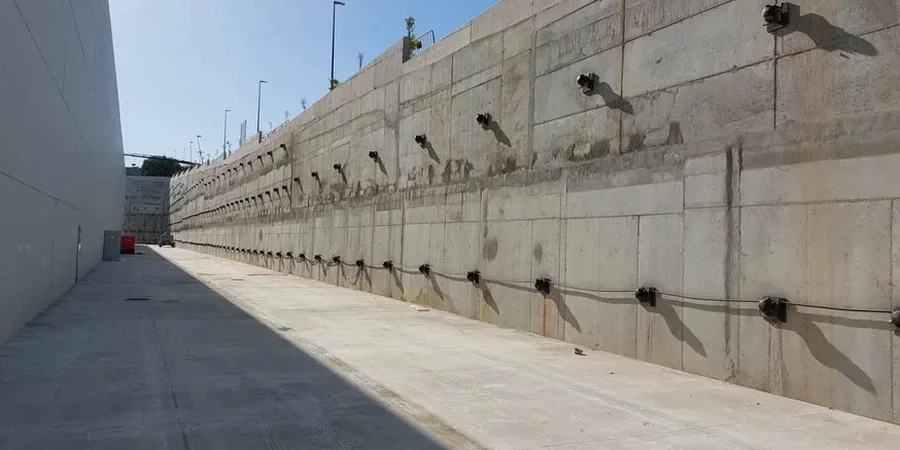
BS 8081:2015 governs ground anchor design across the UK, but its application in Gloucester demands particular attention to the Lias Clay and overlying alluvial deposits of the Severn Vale. This city sits on a complex Quaternary geology where soft silts and peats interbed with dense gravels, creating a stratigraphy that challenges conventional anchor assumptions. Our technical team specifies active anchors with locked-in prestress for retaining walls along the Gloucester-Sharpness Canal corridor, and passive systems where deformation is acceptable during staged excavation. The distinction matters here more than on stiff London Clay sites, because the low undrained shear strength of the local alluvium requires precise bond length calculation under BS EN 1997-1:2004. In Gloucester’s riverine environment, anchor corrosion protection conforming to BS 8081 Table 2 is non-negotiable, particularly where groundwater from the Severn fluctuates seasonally and carries dissolved sulphates. We regularly pair anchor design with deep excavation monitoring to validate lock-off loads during basement construction in the city centre regeneration zones. Gloucester’s post-industrial sites, especially around the former docks, often conceal buried structures that influence anchor inclination and require detailed desk study before any intrusive work begins.
In Gloucester’s soft alluvium, the difference between active and passive anchor performance is measured in the creep rate during the BS 8081 acceptance test.