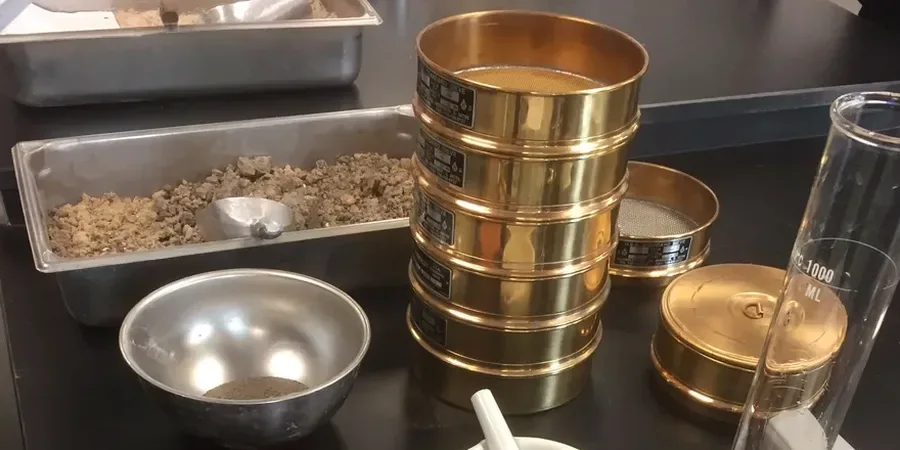
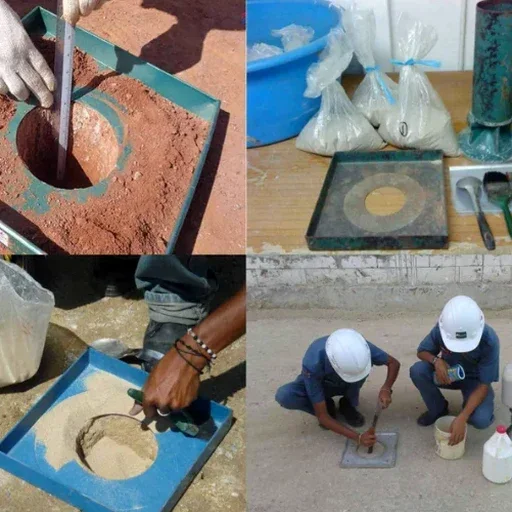
In Gloucester, the success of any earthworks operation on the Lias Clay and river terrace gravels depends entirely on achieving spec compaction. The sand cone test remains the most reliable field verification method when nuclear gauges are impractical on constrained urban sites near the Cathedral or along the Gloucester and Sharpness Canal. The procedure follows BS 1377-9 for in-situ density, using calibrated graded sand to determine the volume of a hand-excavated hole. The laboratory team operates in full accordance with BS 5930:2015+A1:2020 and the relevant sections of Eurocode 7 (BS EN 1997-2:2007) for geotechnical investigation and earthworks control. A proper compaction regime, verified with the field density test, is essential before placing CBR road subbase layers on the A430 Quayside link or any commercial development in the Gloucester Business Park area.
A sand cone field density test directly measures in-place soil volume without radiation, making it the definitive referee method for compaction disputes on UK construction sites.