GEOTECHNICAL ENGINEERING1
GLOUCESTER
HomeLaboratoryAtterberg limits

Atterberg Limits Testing in Gloucester: Clay Classification That Saves Excavation Budgets

Practical geotechnics, field-tested.

LEARN MORE

We still see contractors across Gloucestershire treating all clay as if it behaves the same way. That assumption costs money. A site off Eastern Avenue in Gloucester looked straightforward on the borelog — firm brown clay — until the excavated faces started crumbling after a weekend of rain. The problem wasn't the weather; it was the plasticity. The material sat right on the A-line border between silt and clay, and the Atterberg limits test we ran on remoulded samples showed a liquidity index that explained everything. Before you commit to a shoring system or a foundation depth in Gloucester's Mercia Mudstone-derived soils, the liquid and plastic limits give you a number you can actually design around — not just a visual classification from the trial pit. Combined with a proper SPT drilling campaign, the plasticity data helps our team correlate consistency across the site so the structural engineer isn't guessing when they pick a bearing capacity.

In Gloucester's Lias Clay, a plasticity index above 30% is your early warning for shrink-swell movement — measure it before the footing is poured, not after the plaster cracks.

Our service areas

How we work

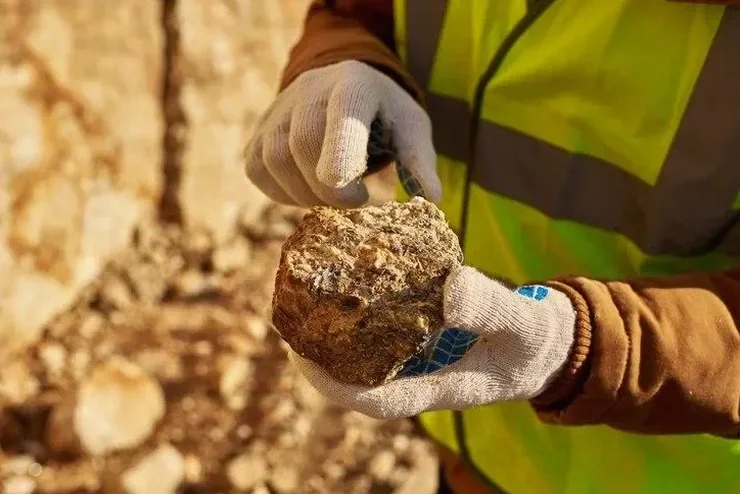
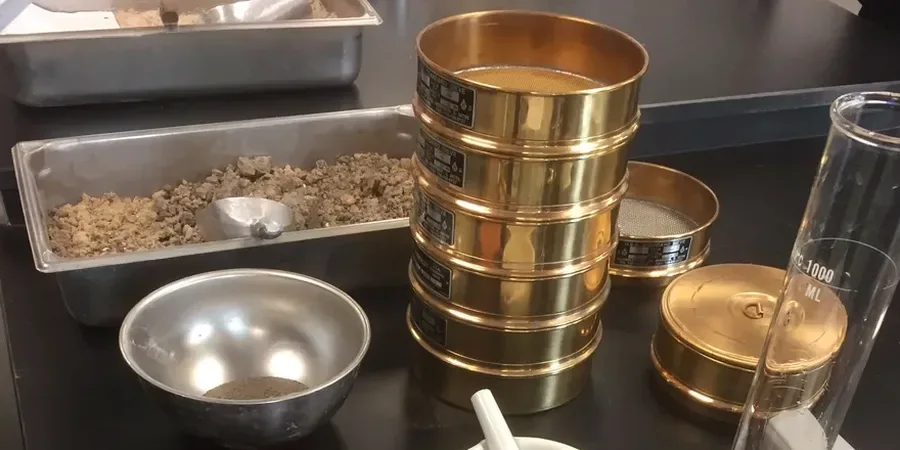
The superficial geology around Gloucester is dominated by Charmouth Mudstone and overlying Lias Clay, with pockets of Quaternary alluvium along the Severn floodplain. Near the canal corridor, we routinely encounter soils with liquid limits above 60% — that is genuinely fat clay, and it swells. Our laboratory determines the liquid limit using the Casagrande cup method and the fall-cone penetrometer as a cross-check, both under BS EN ISO 17892-12:2018. The plastic limit is rolled by hand to 3 mm threads by a technician who does it every working day — there is no machine substitute for that consistency. The difference between those two numbers gives you the plasticity index, and that value feeds directly into the Eurocode 7 empirical correlations for undrained shear strength. When a developer in Quedgeley needed to confirm that imported fill met the Specification for Highway Works Series 600, we paired the Atterberg results with a full grain size distribution analysis to rule out excessive fines migration under the road sub-base. If the sample is organic, we note the colour change on drying and flag it — because organic silt near the docks behaves nothing like the weathered mudstone up on Robinswood Hill.
Atterberg Limits Testing in Gloucester: Clay Classification That Saves Excavation Budgets
Technical reference — Gloucester

Local geotechnical context

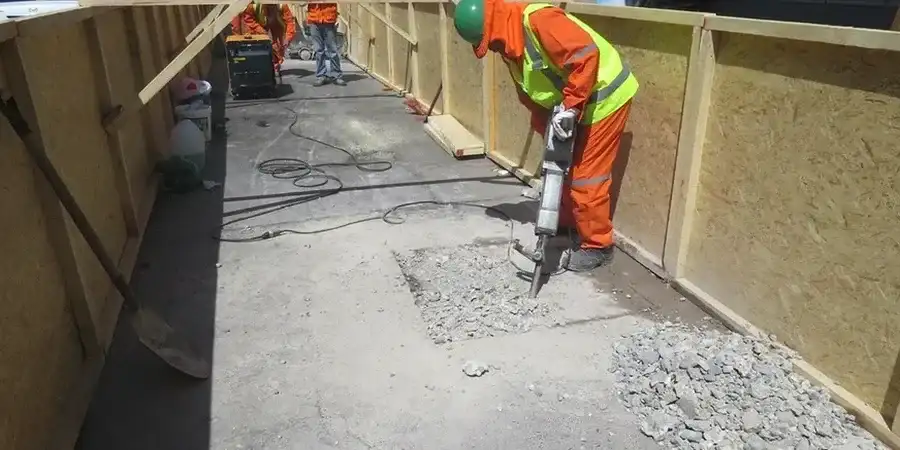
A housing association project off Bristol Road hit a six-week delay because the earthworks specification assumed moderate plasticity, but the trench arisings were sticking to the bucket and refusing to compact. When we tested the material, the plasticity index came back at 35%. That changed the classification from 'suitable' to 'marginal' under the Series 600 table, and the contractor had to import 800 tonnes of granular fill they had not priced. The liquidity index told the story: the natural moisture content was only 2% below the plastic limit, so any rain during grading would turn the formation into a slurry. Gloucester sits in a temperate maritime climate with 650 mm of rainfall spread evenly across the year — there is no dry season to rely on. If the Atterberg limits are not measured before the cut-fill balance is signed off, the risk sits entirely with the contractor. We have also seen basement excavations in the city centre where the retained clay softened progressively during a wet spring, and the original undrained parameters used in the temporary works design no longer applied. A plasticity index check on the softened zone gave the structural engineer the evidence to justify additional propping without a redesign argument.

Need a geotechnical assessment?

Reply within 24h.

Email: contact@geotechnical-engineering1.com

Explanatory video

Applicable standards

BS 5930:2015 + A2:2020 — Code of practice for ground investigations, BS EN ISO 17892-12:2018 — Determination of liquid and plastic limits, Eurocode 7 — BS EN 1997-2:2007, Section 5: Laboratory tests on soil, Specification for Highway Works, Series 600 — Earthworks classification

Typical values

ParameterTypical value
Liquid limit (cone penetrometer)BS EN ISO 17892-12:2018, Clause 5
Plastic limitBS EN ISO 17892-12:2018, Clause 6
Plasticity indexCalculated: LL minus PL
Liquidity indexCalculated from natural moisture content
Consistency indexCalculated: (LL - w_n) / PI
Sample preparationWet sieving through 425 µm, air-drying below 60°C
Classification systemBS 5930:2015 + A2:2020
Typical turnaround3 to 5 working days from sample receipt

Frequently asked questions

How much does Atterberg limits testing cost for a Gloucester project?

For a standard suite covering liquid limit, plastic limit and natural moisture content, our fee ranges from £50 to £90 per sample depending on the number of specimens in the batch and whether an expedited turnaround is needed. Disturbed bag samples from trial pits are straightforward; if we need to extrude and sub-sample from a U100 tube, the preparation time adds slightly to the cost. We can collect samples anywhere in the Gloucester city area and the wider Gloucestershire county.

How many samples do I need to take from my Gloucester site?

The number depends on the variability of the ground. For a single-family dwelling on Lias Clay near Abbeydale, we often test three depths from one borehole. For a linear earthworks scheme across the Severn Vale, where alluvium transitions into mudstone, the BS 5930 guidance on sampling frequency suggests one plasticity suite per material type per 500 m³ of fill, with additional tests wherever the visual classification changes. We can advise on a sampling plan once we see the exploratory hole logs.

What does the plasticity index actually tell the structural engineer?

The plasticity index quantifies the range of moisture content over which the soil behaves plastically. In Gloucester's Mercia Mudstone-derived clays, a PI above 20% flags potential shrink-swell volume change, which matters for shallow footings near trees. A PI below 10% on the alluvium near the docks suggests a silt that may be susceptible to internal erosion if groundwater flow is high. The value also feeds into the Eurocode 7 undrained shear strength correlation cu = 170 / PI (kPa) for normally consolidated clays, giving the design team a first-pass strength estimate before they commit to triaxial testing.

Location and service area

We serve projects in Gloucester and surrounding areas.

View larger map